 1300 138 864

Yes, swimming pool heat pumps perform well in cold weather. While temperature drops can affect how quickly these units heat your pool, modern models are designed to operate efficiently in a wide range of climates.
Unlike solar systems that rely on direct sunlight, heat pumps draw warmth from the ambient air, allowing them to work day and night, even during cloudy or chillier conditions—making them a great choice for winter pool heating.
In this guide, we’ll break down how pool heat pumps work, how they perform in winter, and what you can do to optimise their efficiency.
Whether you’re in Sydney, Newcastle, the Central Coast, or a cooler regional area, we’ll help you get the most out of your pool year-round.
How does a pool heat pump work?
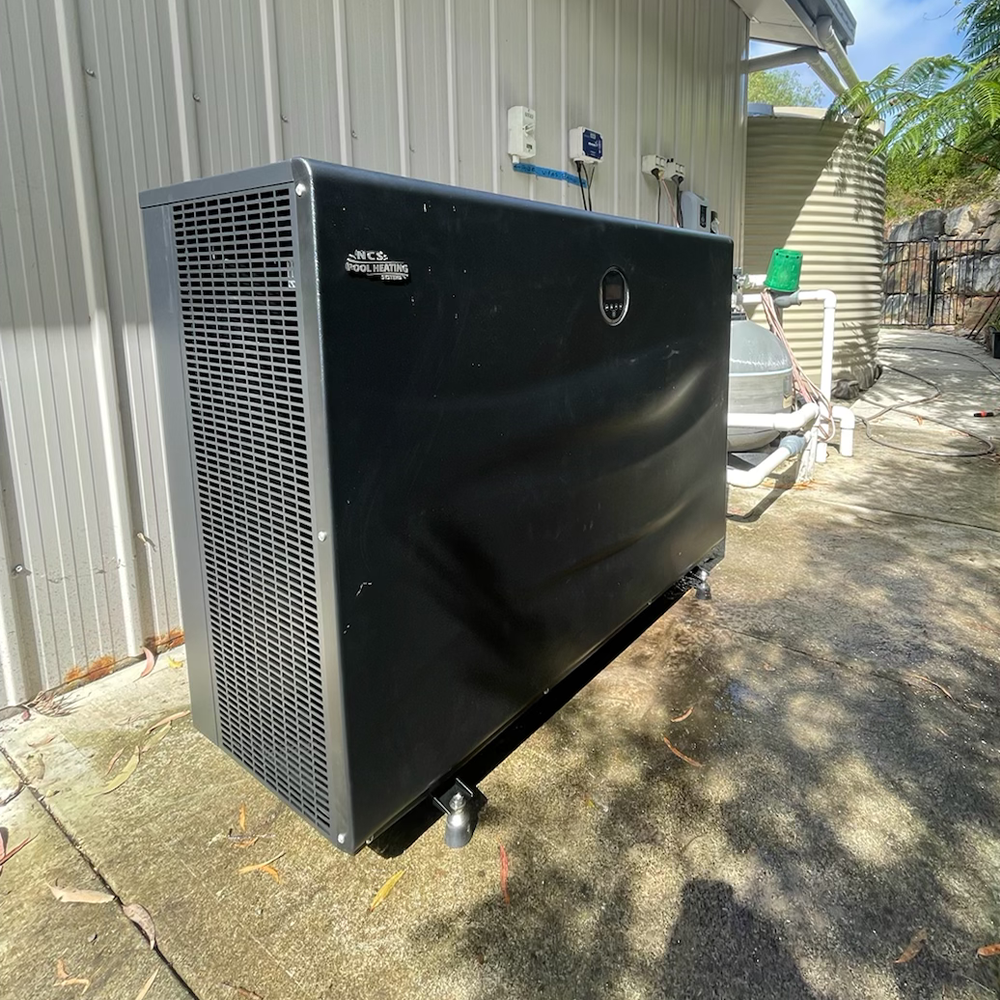
A pool heat pump is an energy-efficient way to keep your pool at a comfortable temperature, especially during cooler months.
Instead of generating heat like gas or electric heaters, a pool heat pump draws warmth from the outside air and transfers it into your pool water.
Here’s how it works: the unit uses a fan to pull in ambient air, which passes over an evaporator coil filled with a refrigerant.
As the refrigerant absorbs the heat, it changes into a gas. This warm gas is then compressed, increasing its temperature even more.
The heat is then transferred to the pool water via a heat exchanger, effectively warming your pool.
Learn more about how pool heat pumps work.
Does a pool heat pump work in winter?
Absolutely—but with a few limitations. Pool heat pumps are designed to function year-round, including during colder months.
However, their ability to warm your pool depends on the surrounding air temperature, since they rely on drawing heat from the air rather than generating it directly.
In most parts of Australia, pool heat pumps remain effective throughout winter, particularly in areas where outside temperatures don’t fall below 7°C.
As it gets colder, the system has to work harder to extract enough heat, which can increase energy use and reduce efficiency. Heating times may be longer, but the pump will still do its job.
Compared to traditional gas or electric heaters, heat pumps are still better for energy efficiency.
They typically produce between three to seven units of heat for every unit of electricity used, making them an economical choice over the long term, even in cold winters.
Benefits of using a pool heat pump in cold weather
Efficient heating all year round
Even when the mercury drops, a pool heat pump can effectively warm your swimming pool by extracting residual heat from the air, even at temperatures as low as 7°C. This makes it an ideal choice for chilly mornings or colder Australian regions where traditional heaters may struggle or cost more to run.
Lower energy bills in winter months
Unlike a gas pool heater, heat pumps work by transferring heat from the outside air, even when the ambient temperature feels relatively cool. This results in lower winter running costs, helping you swim without a shock on your electricity bill.
Prolong your swim season in cold climates
Generally speaking, a heat pump allows you to swim comfortably during autumn and winter, not just in summer. Whether you’re in Sydney, Newcastle or regional NSW, a quality heat pump lets you enjoy your swimming pool even no matter the weather conditions.
Stable temperature despite weather changes
Cold snaps and fluctuating temperatures are common in winter. Heat pumps provide consistent water temperatures, making them perfect for families or regular swimmers who want reliable comfort, regardless of how chilly it gets outside.
Environmentally friendly heating in winter
Even in colder months, pool heat pumps produce fewer emissions than gas heaters. By relying on ambient heat and efficient technology, they reduce your carbon footprint while keeping your pool warm.
How to get the most out of your pool heat pump in cold weather
Keep your heat pump well-maintained
Regular maintenance is key to ensuring your heat pump runs efficiently, especially in winter.
Clear away any leaves, dirt, or debris that may have built up around the unit, as restricted airflow can reduce performance and increase energy consumption.
Make it a habit to check your heat pump regularly during the colder months to avoid unexpected issues when you need it most.
Use a high-quality pool cover

One of the easiest and most effective ways to retain heat is to use a thermal pool cover. Acting like a lid for your swimming pool, a cover traps warmth in the water and minimises heat loss to the cold air, especially overnight.
It also reduces evaporation, which is one of the biggest sources of heat and water loss for your pool in winter.
In fact, in many parts of NSW, the sun can still provide enough warmth during winter days to help heat your pool—if that heat is retained.
A good pool blanket absorbs solar energy and helps transfer it into the pool water, giving your heat pump a welcome boost.
Invest in a larger pump
If you’re planning to swim through the colder months in a warm pool, consider investing in a higher-capacity heat pump.
Bigger units are better equipped to maintain a consistent pool temperature in cool conditions, as they can move more heat in less time.
Think of it like choosing a more powerful car to climb a hill—it’ll do the job faster and more efficiently than a smaller engine.
Ultimately, oversizing your heat pump slightly ensures your system can handle the extra workload in winter without pushing its limits.
Swim in comfort all year round with an NCS pool heat pump

As energy costs climb and temperatures drop, many pool owners are asking, ‘Does a pool heat pump work in cold weather?’
The short answer: Absolutely.
With the right setup, pool heat pumps are a smart, energy-efficient way to keep your pool warm in winter.
You can also maximise your pool pump’s performance in cold weather by pairing it with a quality cover to retain heat or upgrading to a larger unit.
NCS Pool Heating & Filtration Systems makes it easy to choose the best pool heating system for your local climate.
We offer pool heat pumps and professional installation across Newcastle, Sydney, the Central Coast, Lake Macquarie, the Hunter Valley and the Mid North Coast. Reach out to us today to extend your swimming season.
 1300 138 864